
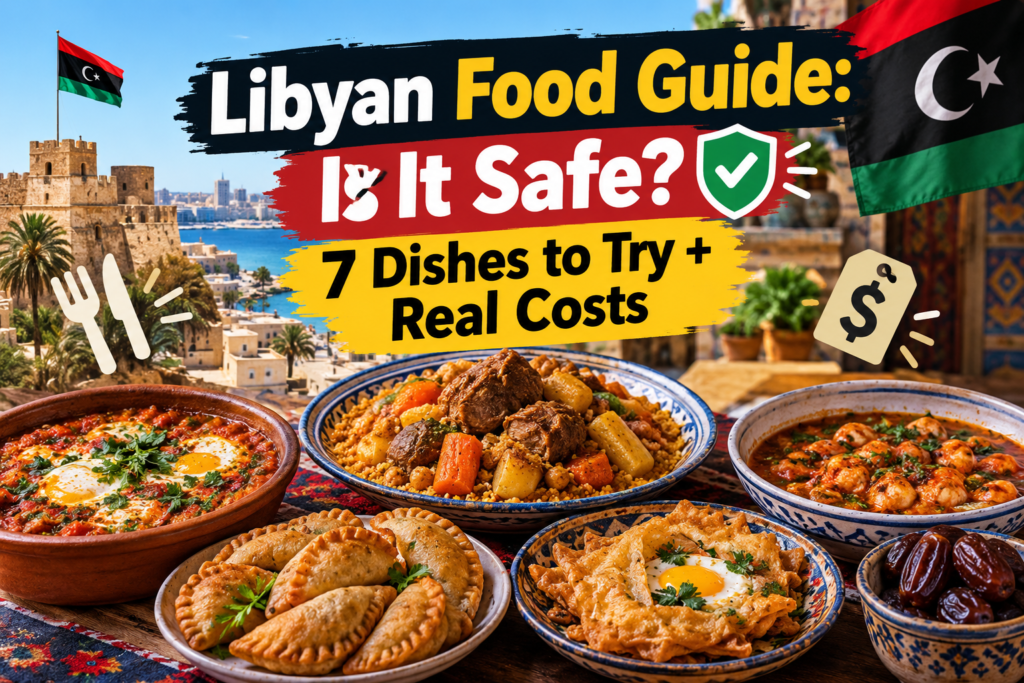
Planning a trip to Libya and wondering what to eat? Is Libyan food safe for tourists? How much does it cost?
I spent 2 weeks eating across Tripoli, Misrata, and Benghazi. This guide covers 7 must-try traditional Libyan dishes, real prices in 2026, safety tips for foreigners, and exactly where to find authentic food. No tourist traps – just what locals actually eat.
Is Libyan Food Safe for Tourists?
Yes, Libyan food is safe if you follow 3 rules. I ate everything from street stalls to home-cooked meals for 14 days with zero stomach issues.
Yes, Libyan food is safe if you follow 3 rules. I ate everything from street stalls to home-cooked meals for 14 days with zero stomach issues.
First, eat it hot. Only eat food that’s cooked and served hot. Avoid anything that’s been sitting out. Second, choose busy restaurants. If you see local families inside, the food is fresh and safe. Empty restaurant means avoid. Third, drink bottled water only. Never drink tap water and use bottled water for brushing your teeth too.
How Much Does Food Cost in Libya 2026?
Libya is very cheap compared to Europe. Here are real prices I paid in July 2026.
A street food snack like a meat sandwich or falafel costs between 5 to 10 Libyan Dinar, which is $1 to $2. A full meal in a local restaurant in Tripoli Old City costs 15 to 30 Dinar, or $3 to $6. If you go to a mid-range restaurant in a tourist area or hotel, expect to pay 40 to 60 Dinar, which is $8 to $12. Coffee with Maqroudh dessert costs 5 to 8 Dinar, so $1 to $1.50.
Daily food budget: If you budget 50 to 75 Dinar per day, that’s $10 to $15, and you’ll eat amazing food three times a day. Tipping is not required in Libya. Just round up 1 or 2 Dinar if the service was great.
7 Traditional Libyan Dishes You Must Try
1. Bazeen – Libya’s National Dish
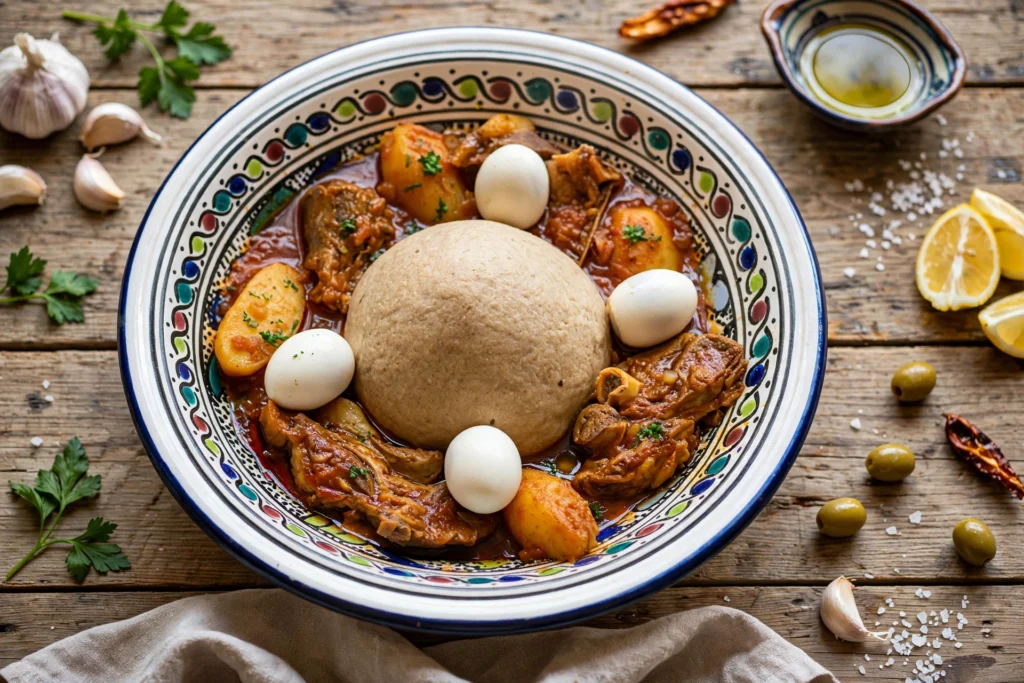
Bazeen is a dome of barley flour dough served with a rich lamb stew, potatoes, and boiled eggs. You tear pieces with your right hand and dip them in the sauce. It’s messy, fun, and 100% Libyan.
The taste is mild and savory, like thick polenta with lamb gravy. It’s not spicy at all, so even kids love it. A plate of Bazeen costs 25 to 35 Dinar, which is $5 to $7 in a local restaurant.T
ourist tip: This is Libya’s most traditional dish. You’ll usually eat it at weddings or Friday family gatherings. Ask for a spoon if you’re not comfortable eating with your hand. Locals won’t mind at all. The best place to try it is Al-Saraya Restaurant in Tripoli Medina. But the best Bazeen is always in a Libyan home if you get invited.
2. Mbakbaka – Libyan One-Pot Pasta
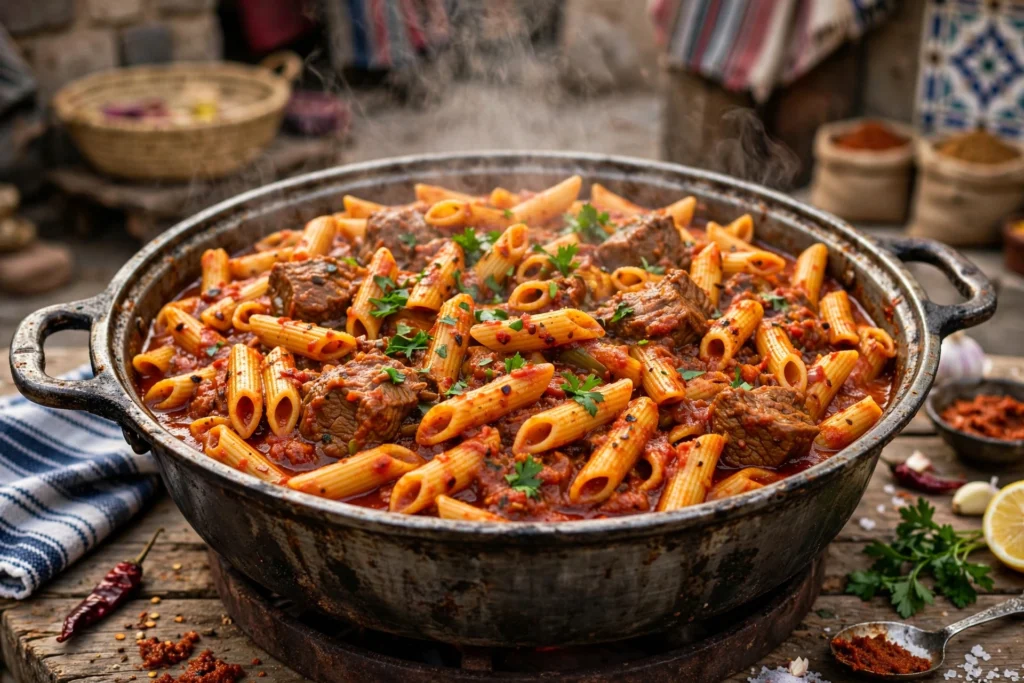
Mbakbaka is pasta cooked directly in a tomato, lamb, and chickpea sauce. Everything goes in one pot. It’s Libya’s ultimate comfort food and the most common homemade dish.
It tastes like Italian pasta but with North African spices like cumin and turmeric. It has a medium spice level and is very hearty. A big bowl costs 18 to 25 Dinar, which is $3.60 to $5.
Tourist tip: If a Libyan invites you to their home, there’s an 80% chance they’ll serve you Mbakbaka. It’s a sign of hospitality. You’ll find the best M
3. Libyan Couscous
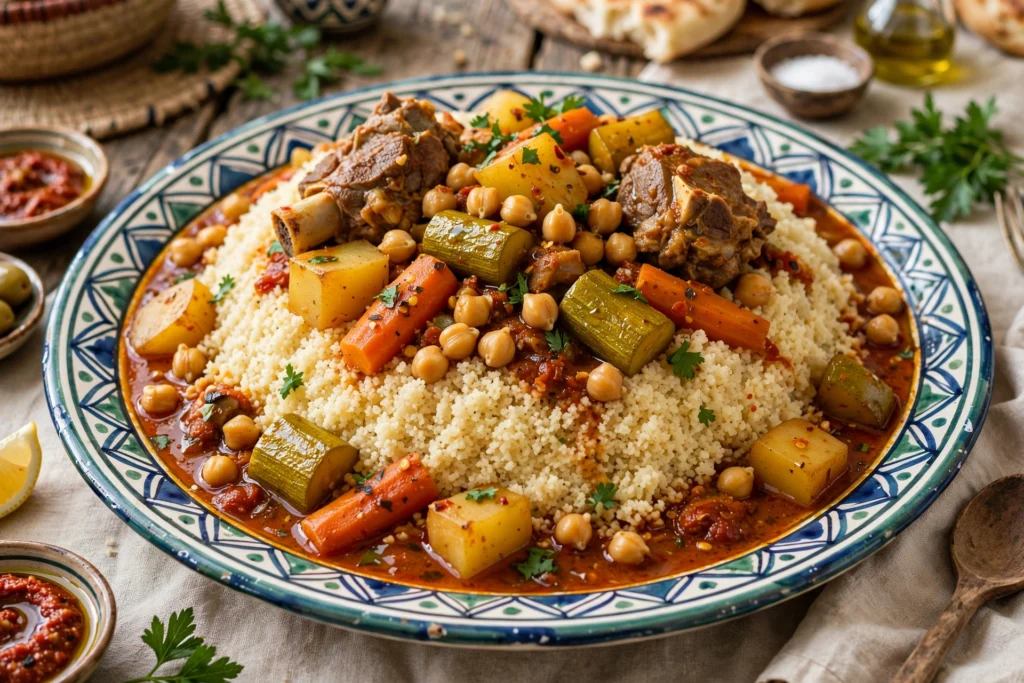
Libyan couscous is steamed semolina topped with lamb, chickpeas, and vegetables like zucchini and pumpkin. It’s served every Friday after prayer and is a weekly tradition.
The taste is fluffy and savory, and it’s less spicy than the Moroccan version. The lamb is always fall-off-the-bone tender. A serving costs 30 to 40 Dinar, or $6 to $8.
Tourist tip: Most restaurants only serve it on Fridays between 1pm and 4pm. That’s the tradition. Show up at 1:30pm for the freshest batch. Head to the Souq Al-Jumaa area in Tripoli and look for places with huge steamer pots outside the door.
4. Shakshuka Libyan Style
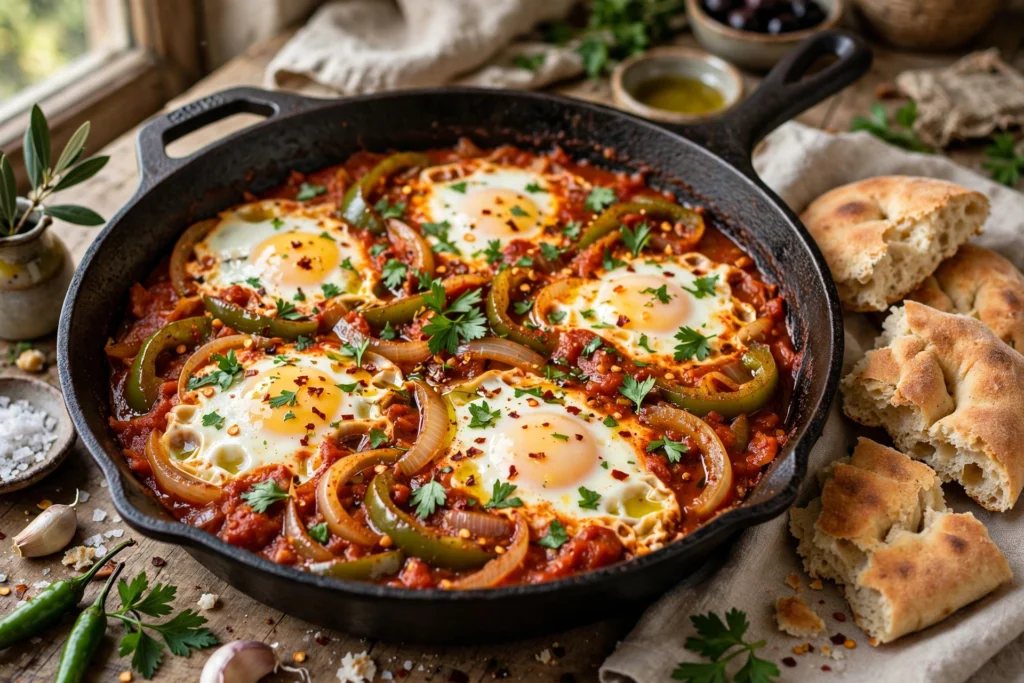
Libyan shakshuka is eggs poached in a sauce of tomatoes, green peppers, onions, and garlic. It’s served hot in the pan it was cooked in, with bread on the side.
It tastes fresh and Mediterranean with a mild heat. It’s the perfect breakfast and costs 12 to 15 Dinar, which is $2.40 to $3.
Tourist tip: Order it with “khobz”, which is fresh Libyan bread. Rip the bread and dip it straight in the pan. Any cafe in the morning serves it, but coffee shops in Benghazi do it best.
5. Asida – Sweet Breakfast Porridge
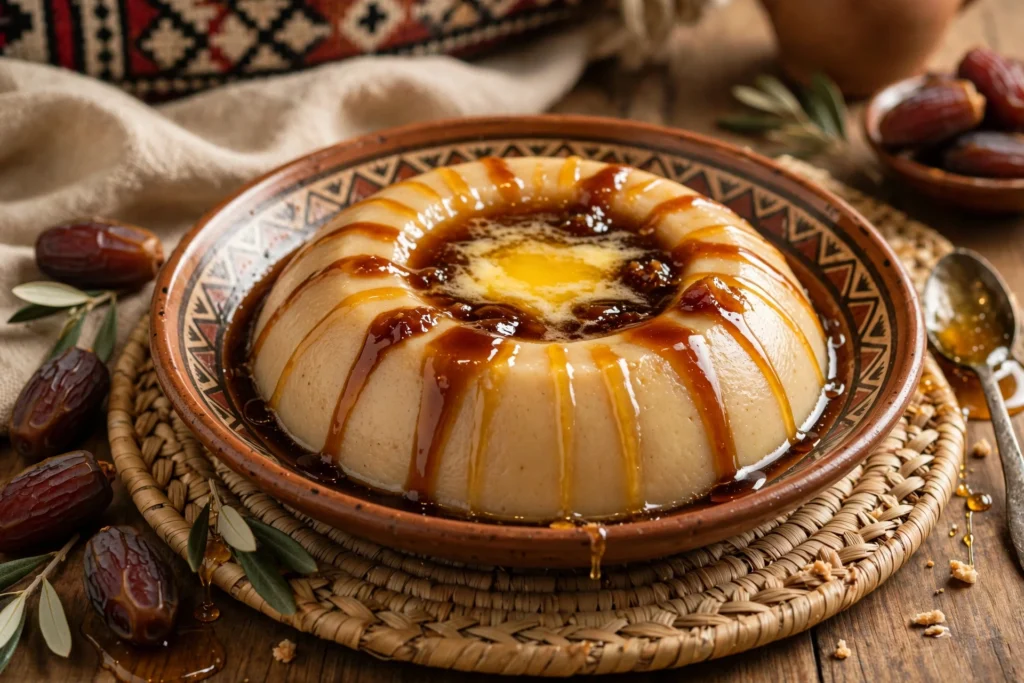
Asida is a warm wheat flour porridge topped with melted butter and date syrup called “rub”. Libyans eat it for breakfast or as a dessert.
It tastes sweet, sticky, and is super filling. It’s like Libyan oatmeal but better. One bowl costs 10 Dinar, or $2.
Tourist tip: Locals eat this when they’re sick or need energy. Try it on a cold morning. One bowl will keep you full for 5 hours. You’ll find it in traditional breakfast places.
6. Maqroudh – Date-Filled Cookies
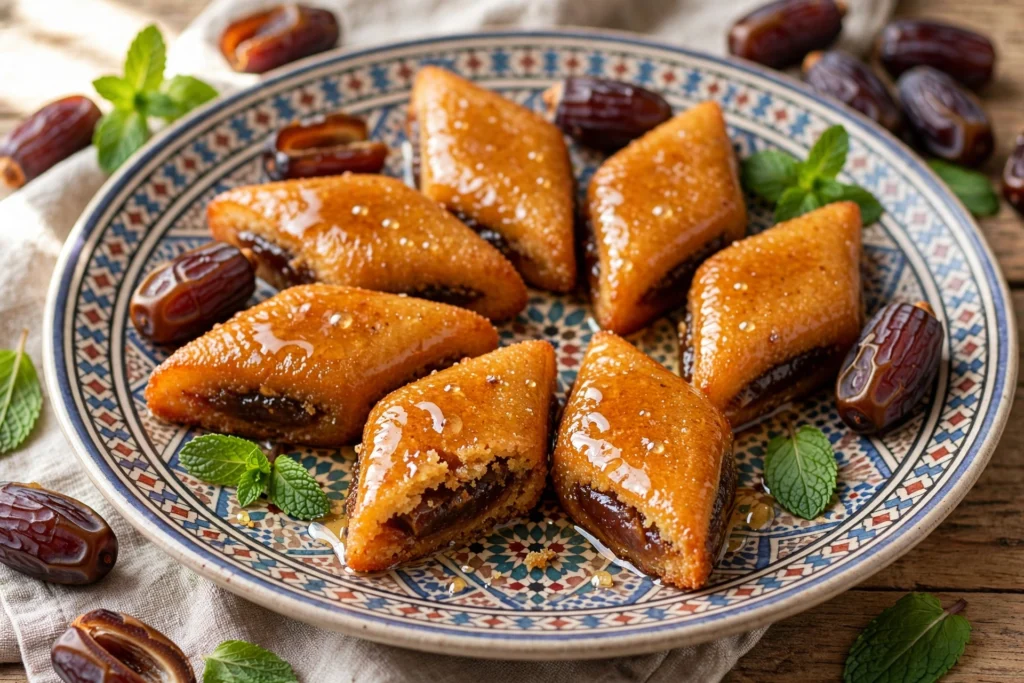
Maqroudh is semolina dough stuffed with date paste, shaped into diamonds, and deep-fried. Then it’s soaked in honey syrup.
They taste sweet, chewy, and addictive. They’re perfect with Libyan mint tea. Each cookie costs 1 Dinar, which is $0.20. You can buy 10 for $2.
Tourist tip: This is the best souvenir to take home. Buy them from pastry shops in Souq Al-Mushir in Tripoli. They stay fresh for 2 weeks in a bag.
7. Libyan Tea – The Social Ritual
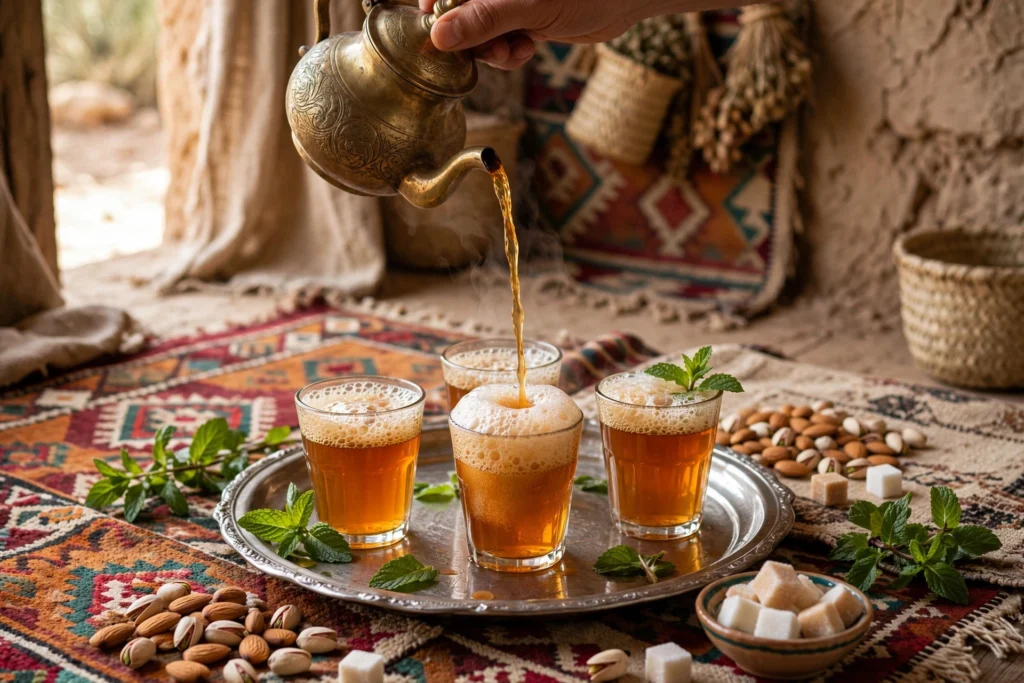
Libyan tea is heavy green tea boiled with lots of sugar and fresh mint. It’s served in three tiny rounds. The first is strong, the second is medium, and the third is very sweet.
It tastes sweeter than Moroccan tea, but you’ll get used to it fast. All three rounds cost 3 to 5 Dinar total, which is $0.60 to $1.
Tourist tip: It’s rude to refuse tea in Libya. It takes 30 minutes to make because it’s about talking, not drinking. Say “Saha” which means cheers after each round.
Where to Eat in Libya as a Tourist: 2026 Guide
In Tripoli, go to the Old City Medina for local, authentic food. Meals cost $3 to $6. Try Bazeen and Mbakbaka here. For a cleaner mid-range option, try Dahra or Gargaresh areas where meals cost $8 to $12. They have great grilled fish and couscous.
In Benghazi, head downtown for family restaurants. They serve amazing Shakshuka and Libyan pasta for $4 to $7 a meal.
In Misrata, the city center has the best home-style food in Libya. This is where you’ll find the best Mbakbaka for $3 to $5.
Avoid empty restaurants near tourist sites. They’re expensive and the food isn’t fresh.
5 Libyan Food Safety Tips for Foreigners
First, follow the rule: peel it, cook it, or forget it. Avoid raw salads from street stalls, but cooked vegetables are fine. Second, check the bread. Khobz should be served hot from the oven. Cold bread means it sat out too long. Third, say no to ice. Don’t take ice in drinks unless you’re in a nice hotel, because ice is made from tap water. Fourth, yogurt is your friend. Libyan “laban” yogurt helps your digestion. Have one every day. Fifth, trust the line. For street food, if 10 Libyans are lining up, it’s safe. Join the queue.
Can Vegetarians Eat in Libya?
Short answer: It’s hard but possible. 90% of traditional dishes have meat.
To tell people you’re vegetarian, say “Ana nabati, bila laham” which means I’m vegetarian, no meat. You can order Shakshuka without eggs, Foul which is fava beans, or Couscous with vegetables only.
Warning: Cross-contamination happens. Most soups use meat broth. If you’re a strict vegan, Libya will be very tough.
Final Tips for Eating in Libya 2026
First, budget $12 per day and you’ll eat amazing food three times a day. Second, get invited to a home. Libyan hospitality is real. Say yes if someone invites you. It’s the best food and the safest. Third, try Bazeen at least once, even if it’s messy. It’s the soul of Libya. Fourth, don’t drink the tea too fast. It’s a three-round ceremony, so relax and talk. Fifth, learn two words: “Sahha” means delicious or thanks, and “Shukran” means thank you. Locals love when you try.
Libyan food is underrated, cheap, and not spicy. You won’t find it in tourist guides yet, which makes it even better.
Have questions about a specific dish or city? Drop a comment and I’ll answer from my trip.