
Introduction
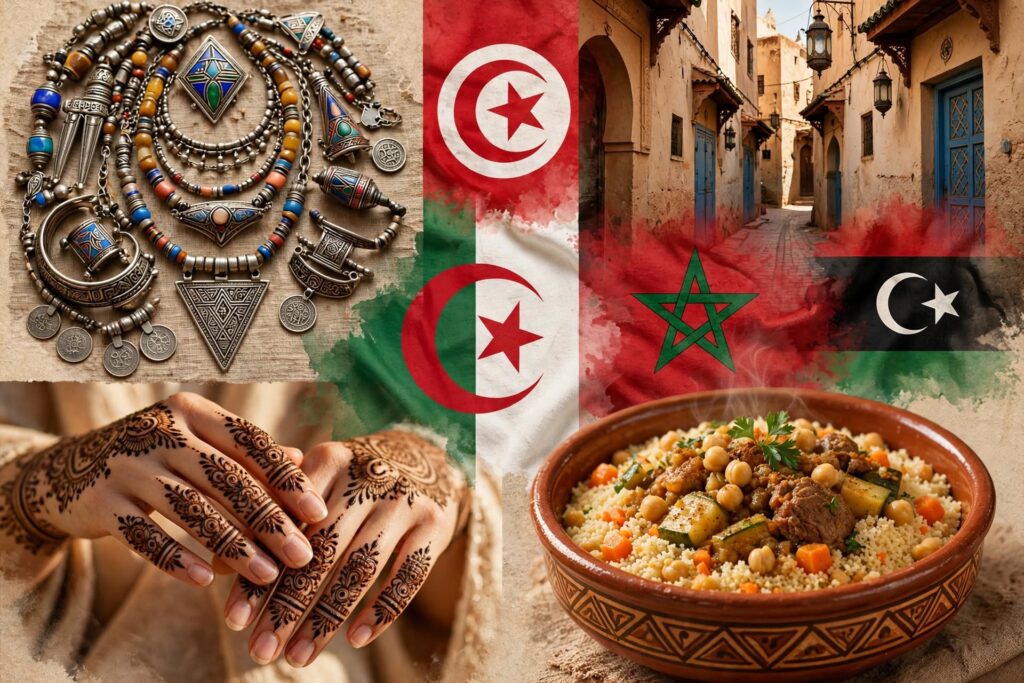
The Maghreb is more than a geographical region. Across Libya, Tunisia, Algeria and Morocco, travelers can discover cultural traditions that cross modern borders and connect communities through food, music, language, crafts, celebrations and everyday life.
Each country has its own identity and regional traditions, but centuries of interaction have also created remarkable similarities. Amazigh heritage, Arab and Islamic traditions, Mediterranean connections, Saharan routes and long-standing trade between communities have all contributed to the cultural landscape of the region.
For visitors, these connections offer an interesting way to understand North Africa: not as four completely separate cultures, but as neighboring societies with shared influences and distinct local expressions.
Quick Answer: What is Maghreb Culture?
Maghreb culture connects Libya, Tunisia, Algeria, and Morocco through shared Amazigh heritage, couscous traditions recognized by UNESCO in 2020, henna rituals recognized by UNESCO in 2024, malouf music across Tunisia and Algeria, and centuries of Mediterranean and Saharan exchange. Each country keeps its own distinct identity while sharing deep cultural roots.
A Shared Amazigh Heritage
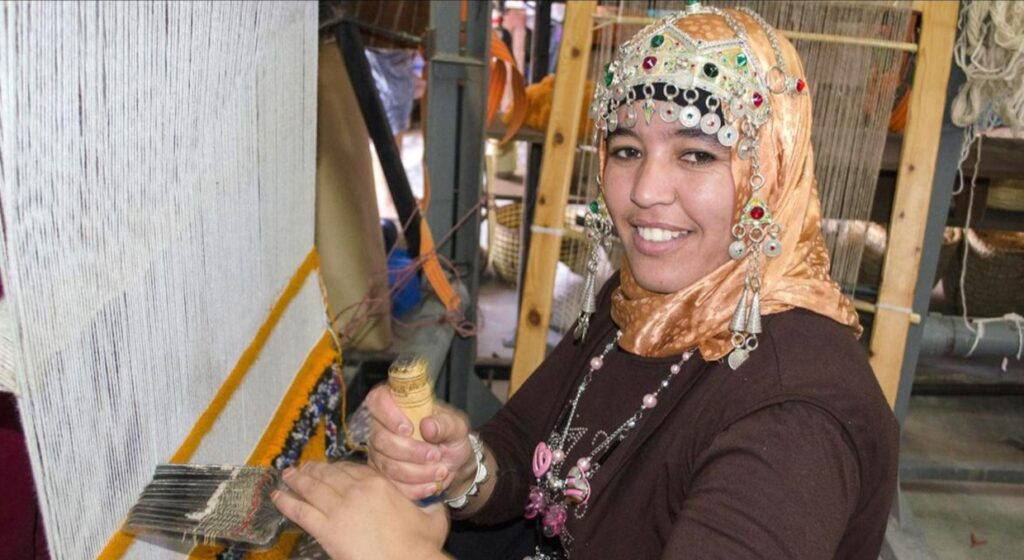
Amazigh heritage is one of the important cultural layers connecting different parts of North Africa. Amazigh communities and traditions exist across Morocco, Algeria, Tunisia and Libya, although their languages, customs and regional identities vary.
Traditional architecture, weaving, jewelry, music, agricultural practices and oral traditions preserve different aspects of this heritage. In some regions, visitors can still see how older cultural traditions continue to influence contemporary life.
Arabic and Maghrebi Dialects
Arabic is another major cultural connection across the region. However, the Arabic spoken in Libya, Tunisia, Algeria and Morocco is not identical.
Maghrebi Arabic developed differently in each country and region, influenced by local history and contact with Amazigh languages and other linguistic traditions. As a result, travelers may recognize familiar words and expressions while also noticing differences in pronunciation and vocabulary as they move from one country to another.
Couscous and the Culture of Sharing

Few foods illustrate North African cultural connections as clearly as couscous. It is prepared in many different ways, with recipes and ingredients changing from one region to another.
UNESCO inscribed the knowledge, know-how and practices related to the production and consumption of couscous in 2020 following a joint nomination by Algeria, Mauritania, Morocco and Tunisia. The inscription covers not only the food itself, but also preparation methods, tools, knowledge and the social circumstances surrounding its consumption.
This makes couscous an important example of how a cultural tradition can belong to a wider regional heritage while still having distinct local versions.
Food Beyond Couscous
The cultural connections between the Maghreb can also be seen in everyday ingredients and cooking traditions. Semolina, olive oil, dates, vegetables, bread, spices and different types of meat appear in many regional cuisines.Yet the same ingredient can be transformed into completely different dishes. A recipe may change from one city to another, and even neighboring regions can have their own methods of preparation.
This combination of similarity and difference is one of the defining characteristics of Maghrebi food culture.
Music That Crosses Borders
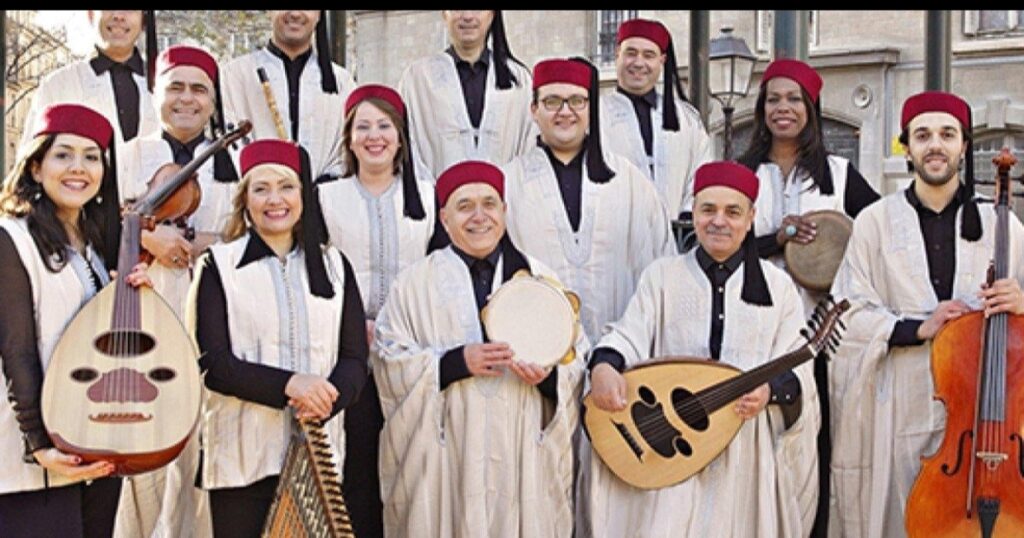
Music provides another example of cultural connections across North Africa. Andalusian musical traditions and regional forms of malouf developed through long histories of cultural exchange.
Malouf is particularly interesting because related traditions exist across eastern Algeria, Tunisia and Libya, while performances and musical styles vary between and within these countries. A 2025 study published by Cambridge University Press examined the connections between Tunisian and Libyan malouf and described malouf as cultural heritage extending across eastern Algeria, Tunisia and Libya.
Weddings, Henna and Family Celebrations
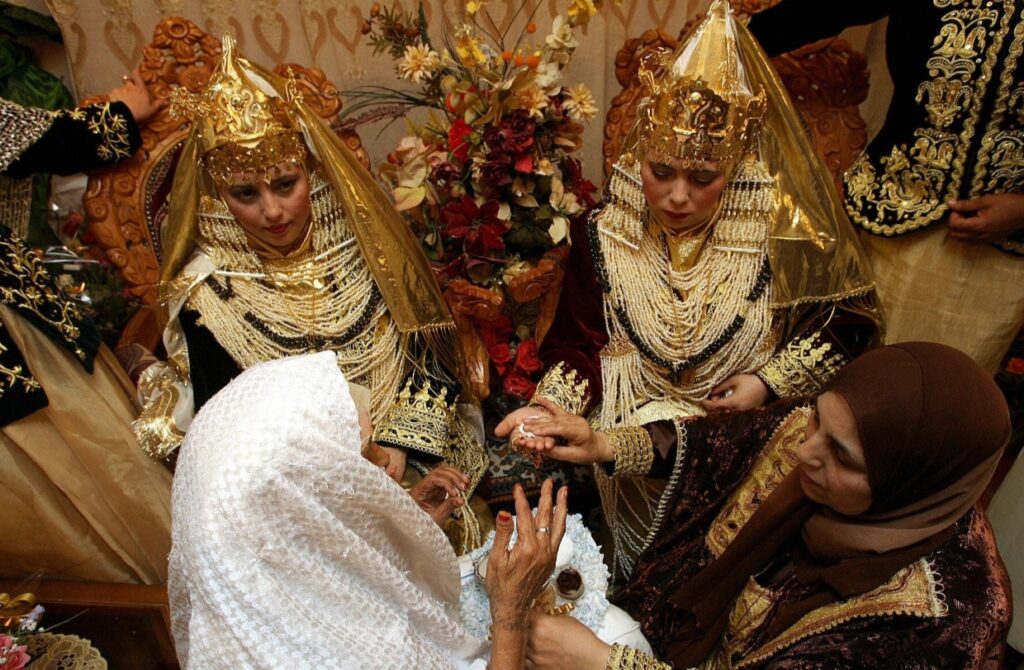
Weddings are another area where cultural similarities can be seen. Traditional clothing, music, family gatherings, special foods and henna ceremonies appear in different forms throughout the region.
The details are not identical. Wedding customs can vary considerably between cities, ethnic communities and rural and urban areas. Nevertheless, the importance of family participation, celebration and traditional ceremonies creates recognizable cultural connections across North Africa.
Henna as a Shared Tradition

Henna has a particularly strong presence in North African celebrations and social traditions. In 2024, UNESCO inscribed “Henna: rituals, aesthetic and social practices” on its Representative List as a multinational heritage element involving Algeria, Morocco, Tunisia and several other countries.
UNESCO describes henna practices as including rituals, ceremonies and social practices associated with important moments in life. This makes henna more than a decorative tradition: it can also carry social and cultural meanings.
Traditional Clothing and Textiles
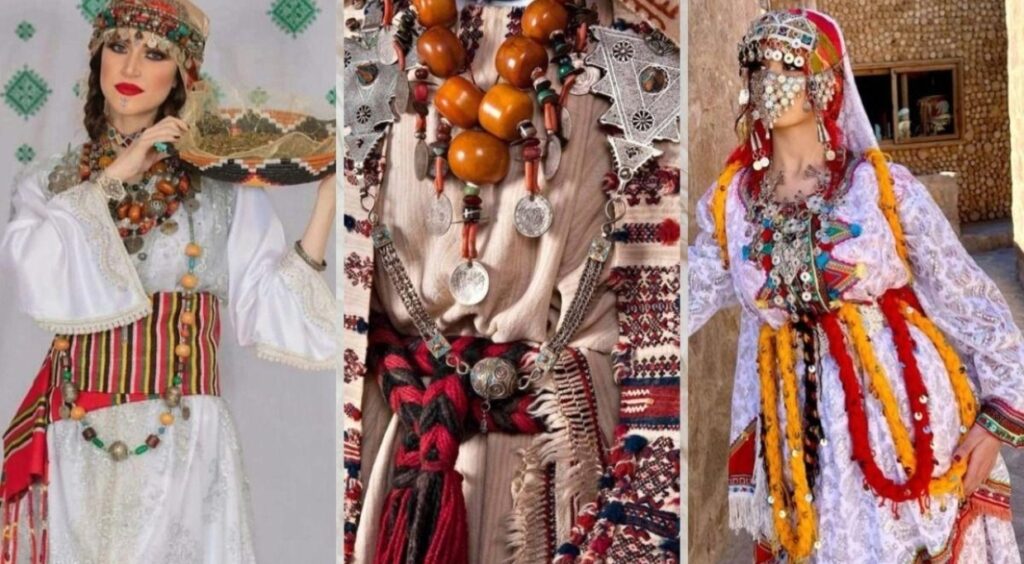
Traditional clothing provides another visible connection between Maghrebi societies. Robes, embroidered garments, woven textiles, head coverings and ceremonial clothing have long been part of cultural life.
The designs and names vary greatly. A traditional garment in Morocco may look very different from clothing worn in Algeria, Tunisia or Libya. Even within one country, regional clothing can have its own colors, materials and embroidery techniques.
These differences do not erase the wider cultural connections. Instead, they show how related traditions developed in different local environments.
Crafts Passed From One Generation to Another
Pottery, weaving, leatherwork, jewelry, embroidery and metalwork are found in different forms throughout the Maghreb.
Traditional crafts often depend on skills learned through practice and passed between generations. Designs may reflect local history, geography and community identity, while some techniques and materials have parallels across national borders.
UNESCO also recognizes metal engraving traditions involving gold, silver and copper across several countries, including Algeria, Morocco and Tunisia.
Medinas, Souks and Traditional Architecture
Historic medinas and traditional markets provide another cultural link between the countries. Narrow streets, courtyards, mosques, houses, workshops and souks have shaped urban life in many North African cities.
The architecture is not uniform. Moroccan, Algerian, Tunisian and Libyan historic towns each have their own architectural character. However, the relationship between the market, neighborhood, religious buildings and traditional crafts reveals similar patterns of urban life that developed over centuries.
The Mediterranean and the Sahara
Geography has played an important role in shaping the shared culture of the Maghreb.
The Mediterranean connected coastal communities through trade and movement, while Saharan routes linked communities across the desert and between northern and southern regions.
This combination helped create a cultural landscape influenced by both the Mediterranean and the Sahara. Coastal cities, mountain communities, oasis settlements and desert regions therefore developed different traditions while remaining part of a broader North African cultural world.
Similar Traditions, Different Identities
One of the most important things to understand about Maghrebi culture is that shared heritage does not mean identical culture.
A tradition may exist in several countries but have a different name, recipe, musical style, garment or ceremony in each one. Regional differences can be just as important as national differences.
This is why it is more accurate to describe the culture of Libya, Tunisia, Algeria and Morocco as a network of related traditions rather than as one single culture.
What Travelers Can Notice
For travelers, these cultural connections can become visible during everyday experiences. A visit to a traditional market may reveal familiar crafts, a family meal may include ingredients found elsewhere in the region, and a wedding celebration may contain customs that feel recognizable while remaining locally distinctive.
Traveling across the Maghreb can therefore reveal both continuity and diversity. The more regions a traveler visits, the easier it becomes to see how traditions have moved, adapted and developed over time.
Why Maghrebi Culture Is Still Diverse
Libya, Tunisia, Algeria and Morocco should not be treated as culturally identical. Each country contains different regions, communities and historical experiences.
Coastal communities may have traditions shaped by Mediterranean connections, while mountain, oasis and desert communities have developed different ways of life. Amazigh, Arab and other local identities also contribute to the diversity found across the region.The shared culture of the Maghreb is therefore best understood as a cultural family with many different expressions.
Frequently Asked Questions
Are Libya, Tunisia, Algeria and Morocco culturally similar?
Yes, they share a number of cultural influences and traditions, including elements of Amazigh, Arab and Islamic heritage, as well as long-standing Mediterranean and Saharan connections. However, each country and region has its own distinctive identity.
What is one of the best examples of shared Maghrebi heritage?
Couscous is one of the clearest examples. UNESCO recognized the knowledge, skills and practices connected with couscous production and consumption as shared intangible cultural heritage of Algeria, Mauritania, Morocco and Tunisia in 2020.
Do Libya and Tunisia share musical traditions?
Yes. Malouf is an important example of a musical tradition shared across eastern Algeria, Tunisia and Libya, although its forms and performance traditions differ between regions.
Is henna part of Maghrebi culture?
Yes. Henna has important ritual and social uses in Algeria, Morocco and Tunisia, among other countries. UNESCO inscribed henna rituals, aesthetic and social practices as multinational intangible cultural heritage in 2024.
Conclusion
The shared culture of Libya, Tunisia, Algeria and Morocco is one of the most fascinating aspects of the Maghreb. Modern borders separate four countries, but they do not erase centuries of cultural exchange.
Food, music, language, clothing, crafts, architecture, celebrations and family traditions all reveal connections that developed over generations.
At the same time, the differences between regions are just as important. The beauty of Maghrebi culture lies precisely in this combination: shared roots, familiar traditions and four countries with their own distinctive cultural expressions.