
Quick Costs 2026: Tea $0.5 FREE, Bazin $2, Couscous $2-3, Crafts $5-15, Taxi $1-2. Most traditions FREE to watch.
Introduction
Libya is a country rich in history, traditions, and cultural heritage. Located in North Africa along the Mediterranean coast, Libya has been influenced by Amazigh (Berber), Arab, Ottoman, Roman, and Islamic civilizations for centuries.
Today, Libyan traditions continue to play an important role in daily life. Hospitality, family values, traditional clothing, delicious cuisine, and colorful celebrations remain at the heart of Libyan society.
The Importance of Hospitality in Libya
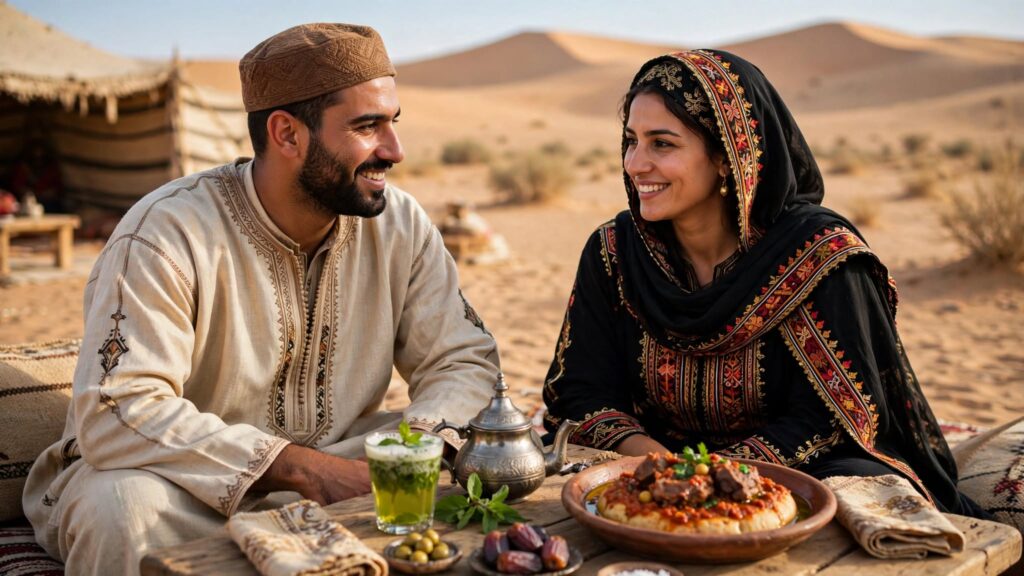
Hospitality is one of Libya’s strongest traditions. Guests are welcomed with respect and generosity, often receiving Arabic coffee, mint tea, dates, sweets, and homemade meals.I
nviting visitors into the home is considered a sign of honor, and Libyans are well known for their kindness toward family, friends, and travelers.
Cost 2026: Tea $0.5 in cafe, FREE in homes (3 refills), dates FREE
Safety: 100% safe, accept with right hand, say Shukran
Traditional Libyan Clothing
Traditional clothing reflects Libya’s rich cultural identity.
Men commonly wear:
• Jalabiya
• Burnous
• Traditional headscarves
Women traditionally wear:
• Farashia
• Embroidered dresses
• Beautiful silver jewelry
• Traditional veils during celebrations
Although modern fashion is popular today, traditional clothing is still worn during weddings, festivals, and religious holidays.
Cost 2026: Jalabiya $15-25 to buy, $0 to see, Farashia $10-15, silver jewelry $5-15
Safety: Wear loose clothes in desert, cover shoulders in mosques, 100% safe
Traditional Libyan Weddings
Libyan weddings are joyful celebrations that often last several days.
Popular traditional dishes include:
• Couscous
• Bazin
• Asida
• Shorba
• Mbakbaka
• Grilled lamb
• Stuffed vegetables
Meals are usually shared with family members and guests, emphasizing togetherness and generosity.
• Cost 2026: FREE to watch Zaffa in street Thu-Sat, gift $10-20 if invited
• Safety: Watch from sidewalk, don’t enter tent without invite, ask before photos
Religious and National Celebrations
Libya celebrates many important religious and national occasions.
Major celebrations include:
• Ramadan
• Eid al-Fitr
• Eid al-Adha
• Independence Day
• National celebrations honoring Libyan history
Families gather to pray, share meals, and strengthen community ties during these occasions.
• Cost 2026: FREE to watch, meals $2-3, dates FREE during Eid
• Safety: Join families, respect prayer times, safe daytime
Music and Traditional Arts
Traditional Libyan music reflects centuries of cultural diversity.
Popular styles include:
• Bedouin music
• Amazigh folk music
• Traditional drums
• Poetry performances
• Desert songs
Music plays an important role during weddings, festivals, and community celebrations.
• Cost 2026: FREE at weddings, $2-5 in cafes with Mizwid
• Safety: Clap along, don’t dance in front of elders, 100% safe
Traditional Markets (Souks)
Historic Libyan souks remain an important part of daily life.
Visitors can discover:
• Handmade carpets
• Pottery
• Leather products
• Silver jewelry
• Traditional perfumes
• Local spices
The old markets of Tripoli and Benghazi are among Libya’s most famous cultural attractions.
• Cost 2026: Carpets $5-15, pottery $3-5, silver $5-10, bargain 50% off, Taxi to souk $1-2
• Safety: Tripoli Medina safe 9am-5pm, avoid night, keep wallet front
Family Values in Libya
Family is the foundation of Libyan society.
Respect for parents, grandparents, and elders is deeply rooted in Libyan culture. Family gatherings are common during weekends, religious holidays, and celebrations.
Cultural Diversity in Libya
Libya has been shaped by many civilizations throughout history, including:
• Amazigh(Berber)
• Arab
• Roman
• Greek
• Ottoman
• Islamic
• Mediterranean
This rich history creates one of North Africa’s most diverse cultural identities.
Why Visitors Love Libyan Culture
Travelers appreciate Libya because of its:
• Warm hospitality
• Ancient history
• Desert traditions
• Mediterranean heritage
• Traditional cuisine
• Rich archaeological sites
Despite modernization, Libya continues to preserve many of its authentic customs.
Conclusion
Libya traditions cost $1-20 in 2026. Tea $0.5 FREE refill, Bazin $2-3, crafts $5-15, weddings FREE to watch. Safe in Tripoli/Benghazi daytime, 7 customs FREE, authentic North Africa experience.
Frequently Asked Question
What is Libya famous for culturally?
Libya is famous for its hospitality, desert traditions, ancient Roman ruins, traditional cuisine, and strong family values.
What do Libyans traditionally wear?
Traditional clothing includes the Jalabiya, Burnous, Farashia, embroidered dresses, and traditional head coverings.
What is the national dish of Libya?
Bazin is considered one of Libya’s most famous traditional dishes, alongside Couscous and Mbakbaka.
Is Libya culturally diverse?
Yes. Libya’s culture combines Amazigh (Berber), Arab, Roman, Ottoman, Greek, and Mediterranean influences, making it one of North Africa’s most culturally rich countries.