
Introduction
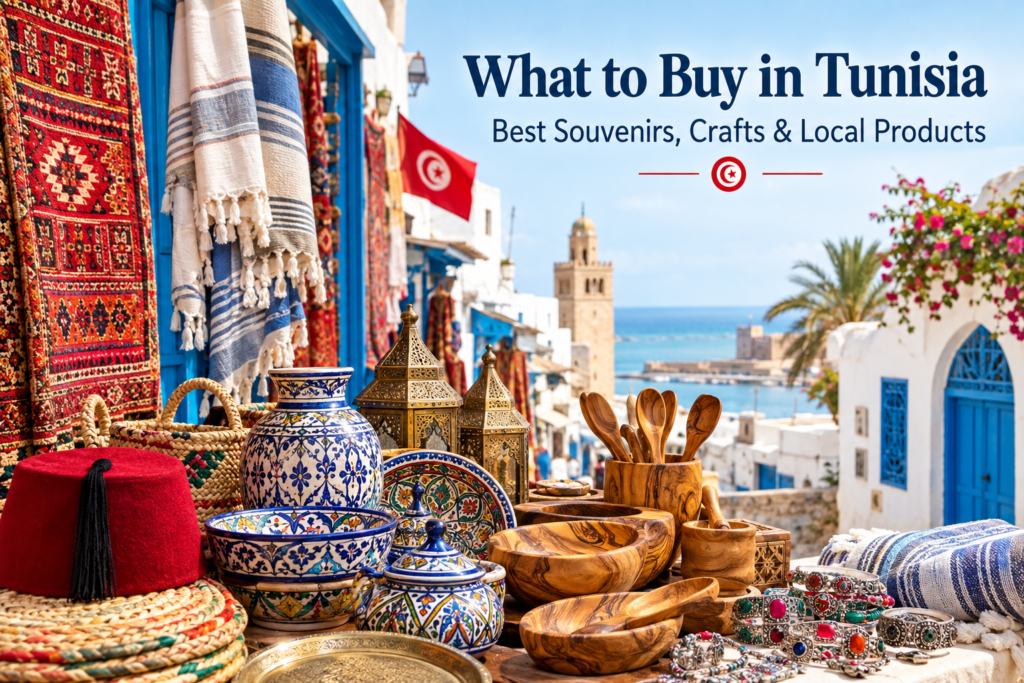
Tunisia is a great destination for travelers who want to take home something connected to the country’s culture and traditions. From handmade pottery and carpets to woven textiles, olive wood products and traditional jewelry, Tunisian markets offer many different souvenirs. Each region has its own specialties, making shopping an interesting way to discover Tunisia’s traditional crafts.
What to Buy in Tunisia
If you are wondering what to buy in Tunisia, you will find much more than ordinary tourist souvenirs. Traditional crafts remain an important part of Tunisian culture, and different regions are known for particular products. Pottery, carpets, textiles, leather goods, jewelry, olive wood and palm-fiber crafts are among the options travelers can find in markets and craft shops across the country.
1. Tunisian Pottery and Ceramics
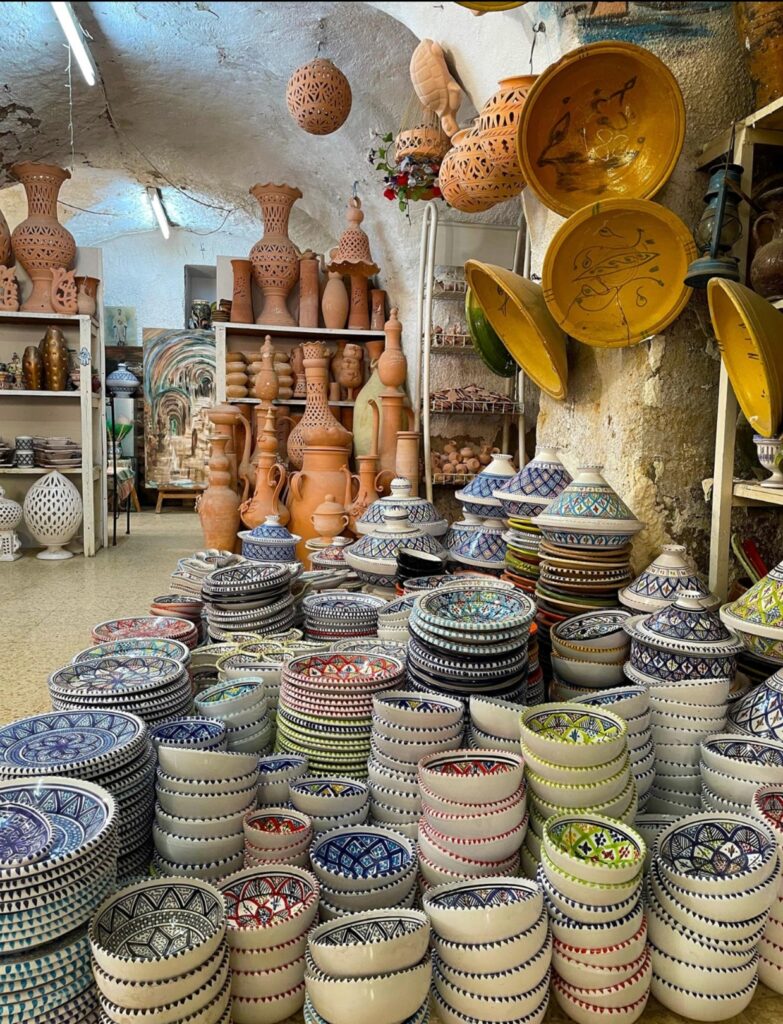
Pottery and ceramics are among the most popular things to buy in Tunisia. Nabeul is particularly well known for its ceramics, while Guellala on Djerba Island has a long tradition of pottery making. You can find decorated plates, bowls, tiles, vases and other handmade pieces in different shapes and styles.
When buying pottery, check the quality of the decoration and finish, especially if you plan to use the item at home. Smaller pieces are usually easier to pack and carry during your journey.
2. Kairouan Carpets and Mergoums
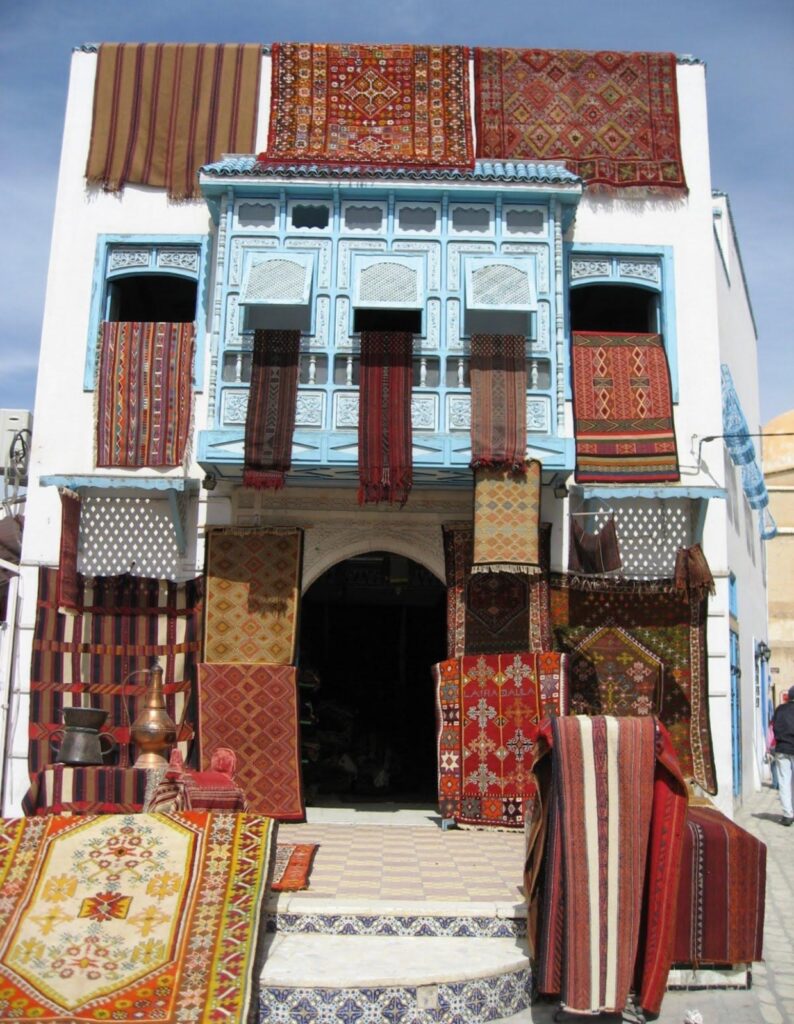
Kairouan is one of Tunisia’s best-known centers for carpet making. Traditional carpets are available in different sizes and designs, while mergoums and other low-pile woven pieces can be lighter and easier to transport. The designs vary from classic patterns to geometric motifs.
If you are considering buying a carpet, ask about the materials, dimensions and method of production. Compare several pieces before making a decision, particularly if you are buying a large or expensive carpet.
3. Tunisian Foutas and Traditional Textiles
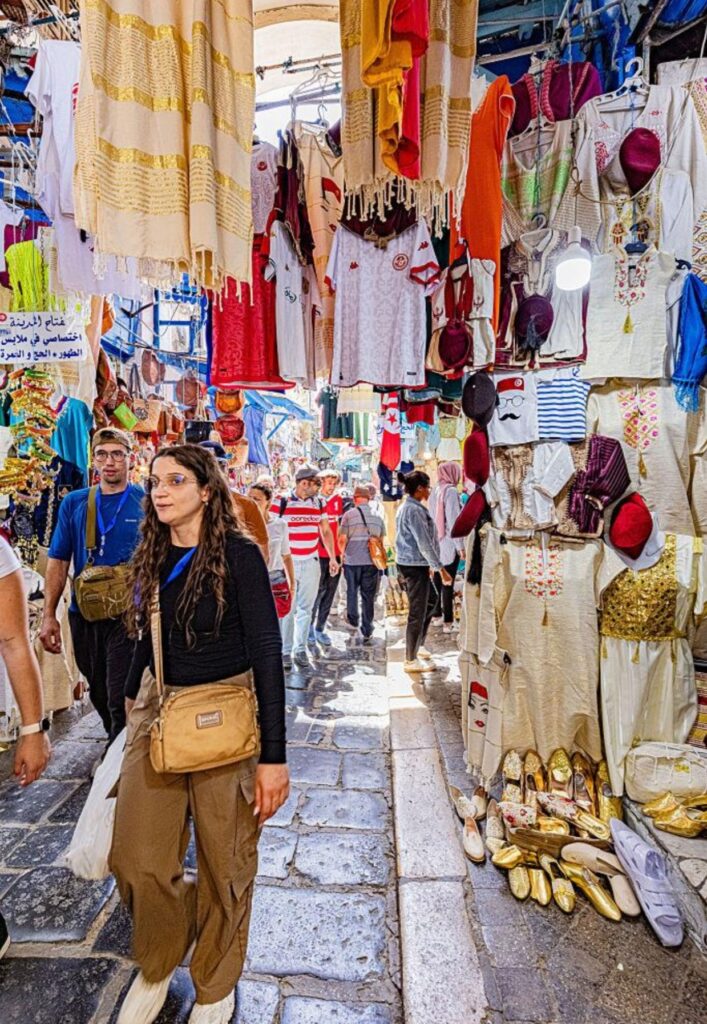
The fouta is a lightweight woven textile traditionally associated with Tunisia. It comes in different colors and patterns and can be used as a towel, beach wrap, home textile or decorative piece. Mahdia is particularly known for its woven textiles and foutas.
Foutas are also practical souvenirs because they are lightweight and generally easier to pack than larger handicrafts. If you want something useful as well as connected to Tunisian textile traditions, a fouta can be a good option.
4. Olive Wood Products
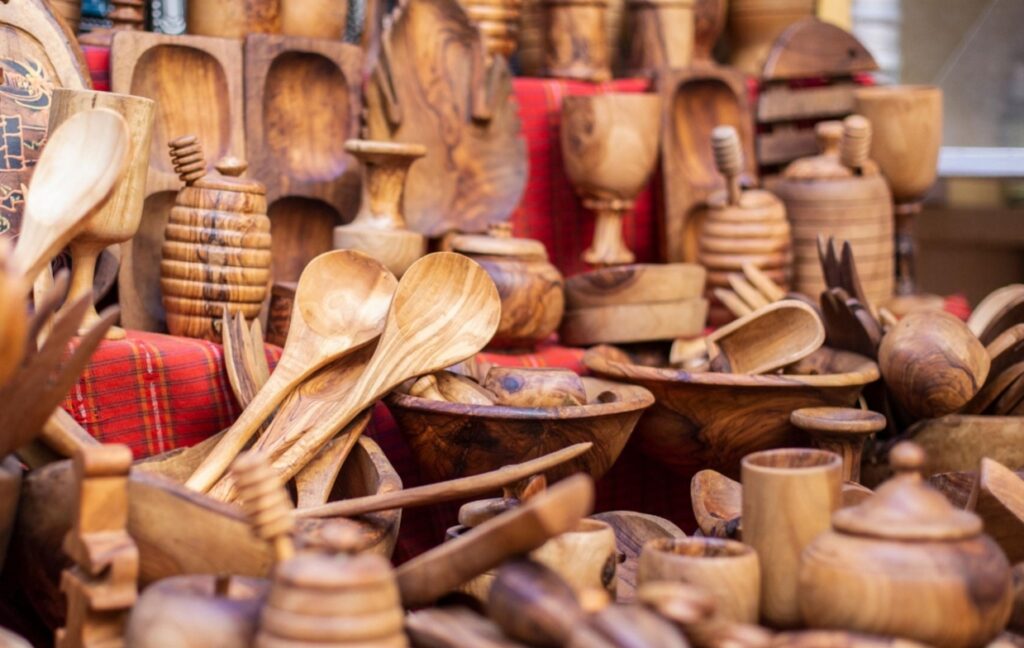
Olive wood is used by Tunisian artisans to create a variety of household and decorative products. In markets and craft shops, travelers may find wooden bowls, spoons, utensils, serving pieces and decorative objects made from olive wood.
These products can make practical souvenirs because they are designed for everyday use as well as decoration. Before buying, check the surface and finishing of the piece and make sure it is suitable for the purpose you have in mind.
5. Tunisian Jewelry
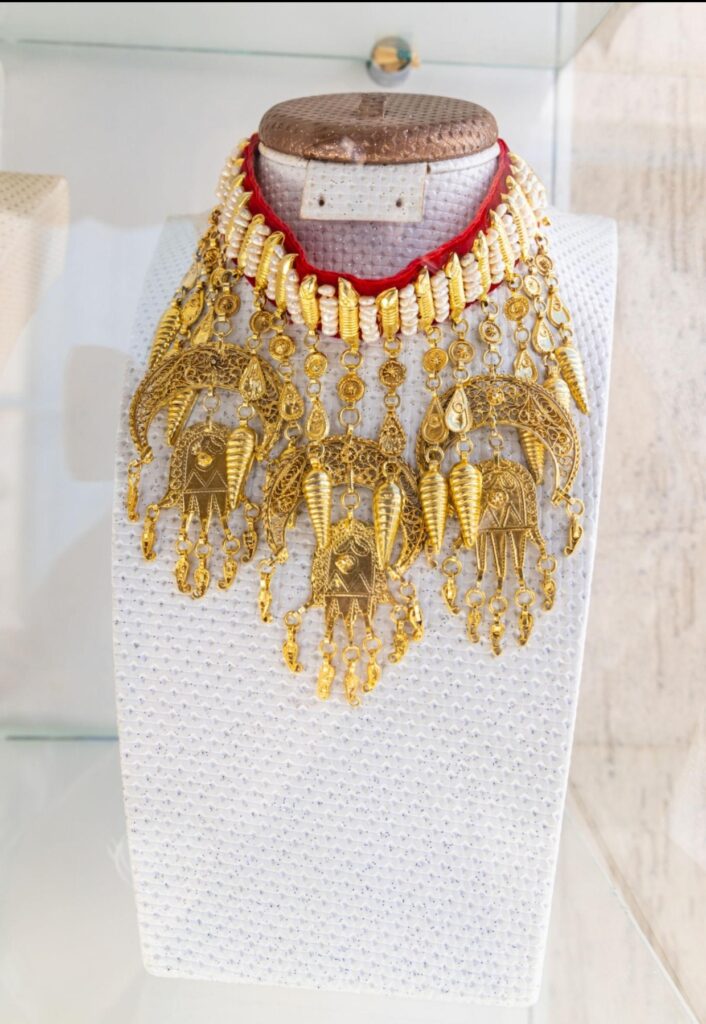
Jewelry is another traditional Tunisian craft worth looking for. Depending on the region, you may find silver jewelry, coral pieces and other traditional designs. Djerba is known for its jewelry souk, while Tabarka is associated with coral and silver jewelry.
If you are buying jewelry, ask clearly about the material and whether the piece is handmade. For valuable items, keep your receipt and any information provided by the seller about the material or origin.
6. Sejnane Pottery
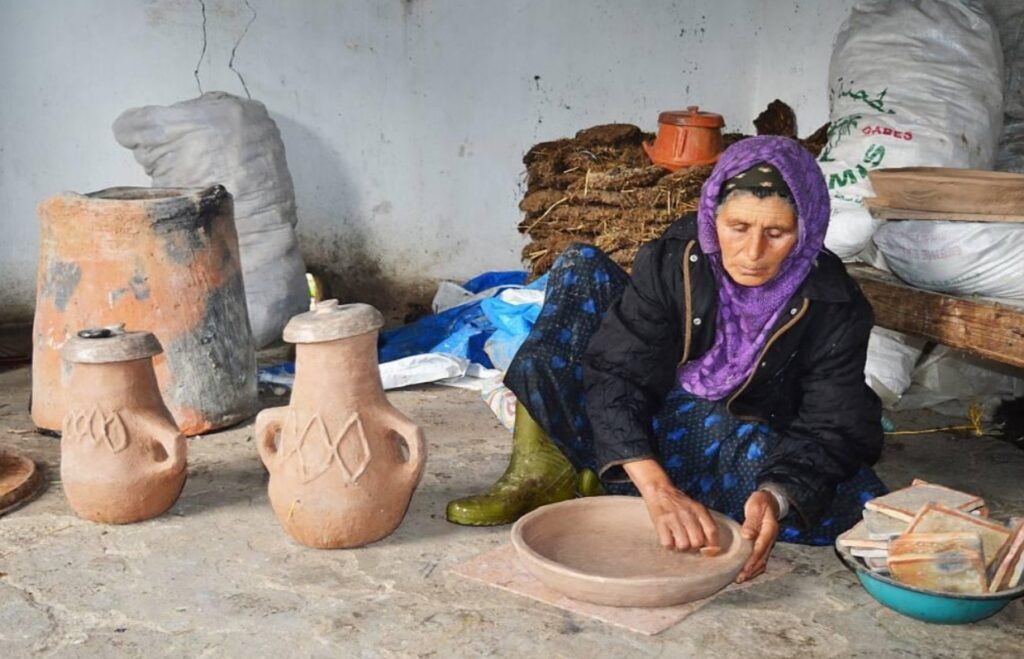
Sejnane pottery is one of Tunisia’s distinctive traditional crafts. The pottery is associated with the village of Sejnane in northern Tunisia and is made using traditional hand-building techniques rather than a conventional pottery wheel. Pieces can feature distinctive geometric and symbolic decorations.
For travelers interested in traditional crafts, Sejnane pottery can be a particularly interesting souvenir because it represents a specific regional tradition rather than a generic tourist product.
7. Leather Goods
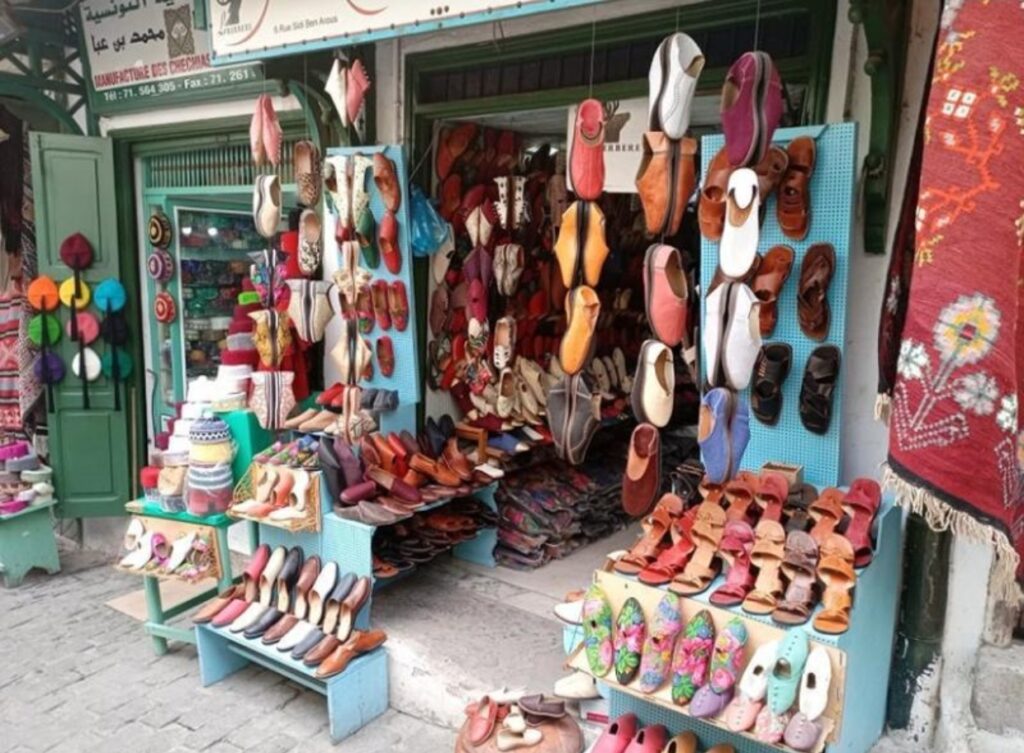
Leather products are widely available in Tunisian markets. Depending on where you shop, you can find leather slippers, belts, bags and other handmade or traditionally styled products. Kairouan has a long association with leather craftsmanship, while leather goods are sold in markets across Tunisia.
When choosing a leather product, inspect the stitching, edges and overall finish. Comparing several products can help you distinguish between different levels of quality.
8. Copper and Brass Crafts
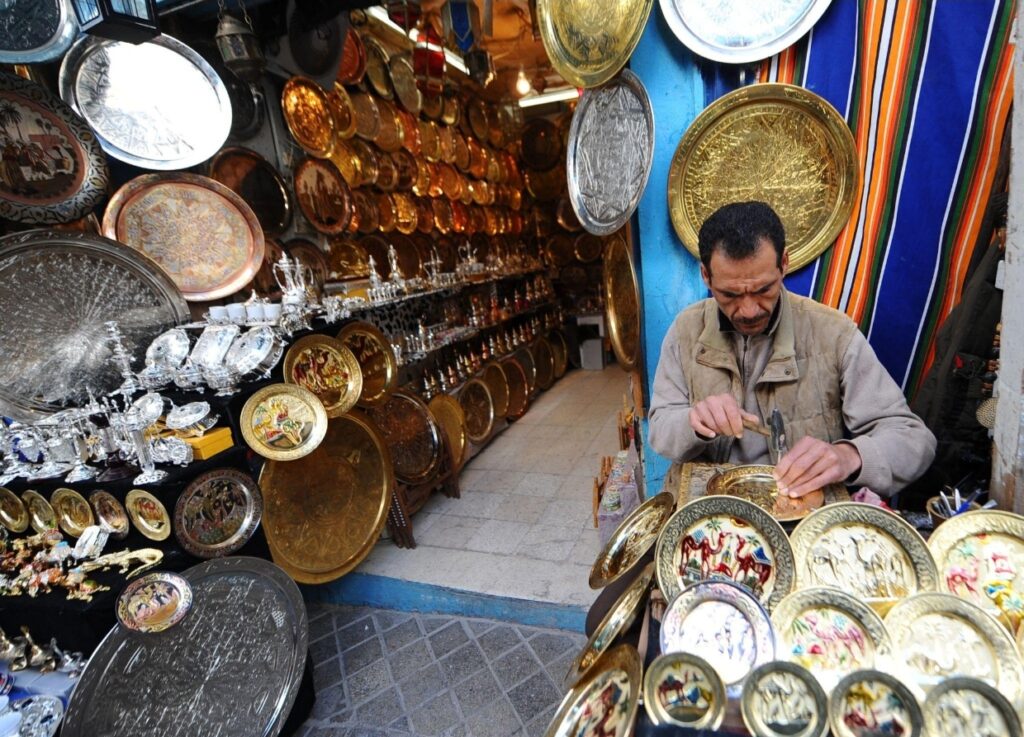
Copper and brass products are another traditional choice in Tunisian souks. Travelers can find engraved lamps, trays, decorative objects and other metal pieces, with some products featuring detailed traditional designs.
These items can be attractive souvenirs, but larger metal pieces may be difficult to transport. If you are flying home with limited luggage, consider a smaller decorative item instead.
9. Palm-Fiber Crafts
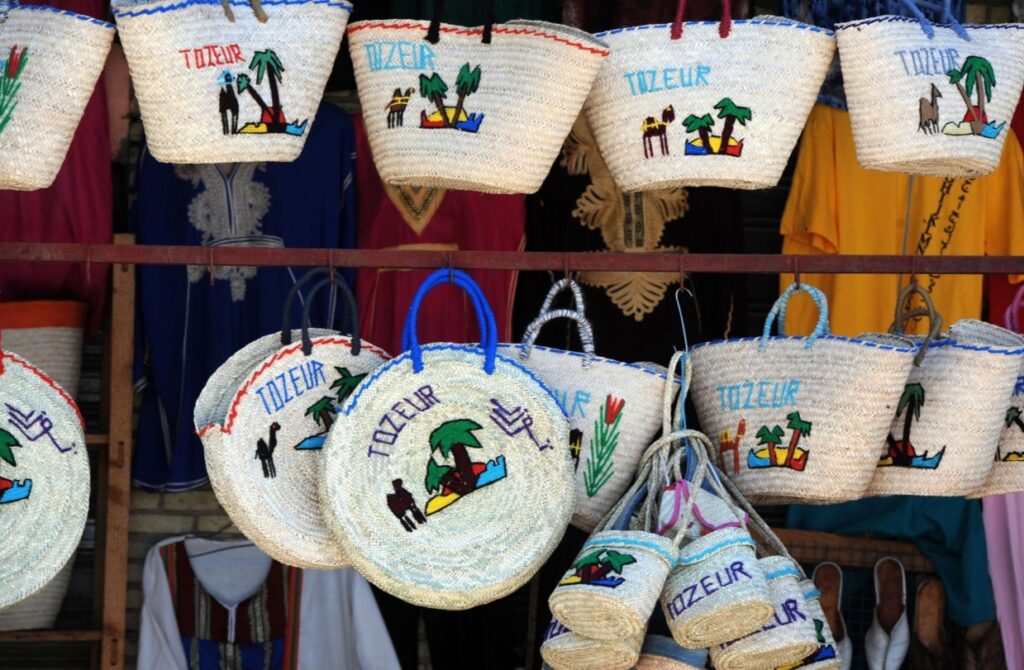
Palm trees provide materials for several traditional crafts in southern Tunisia. Tozeur is particularly associated with products made from different parts of the palm tree, including woven baskets and other handmade objects.
Palm-fiber products are often lightweight and practical, making them convenient souvenirs for travelers. They also offer a connection to the traditional crafts of Tunisia’s oasis regions.
10. The Chechia
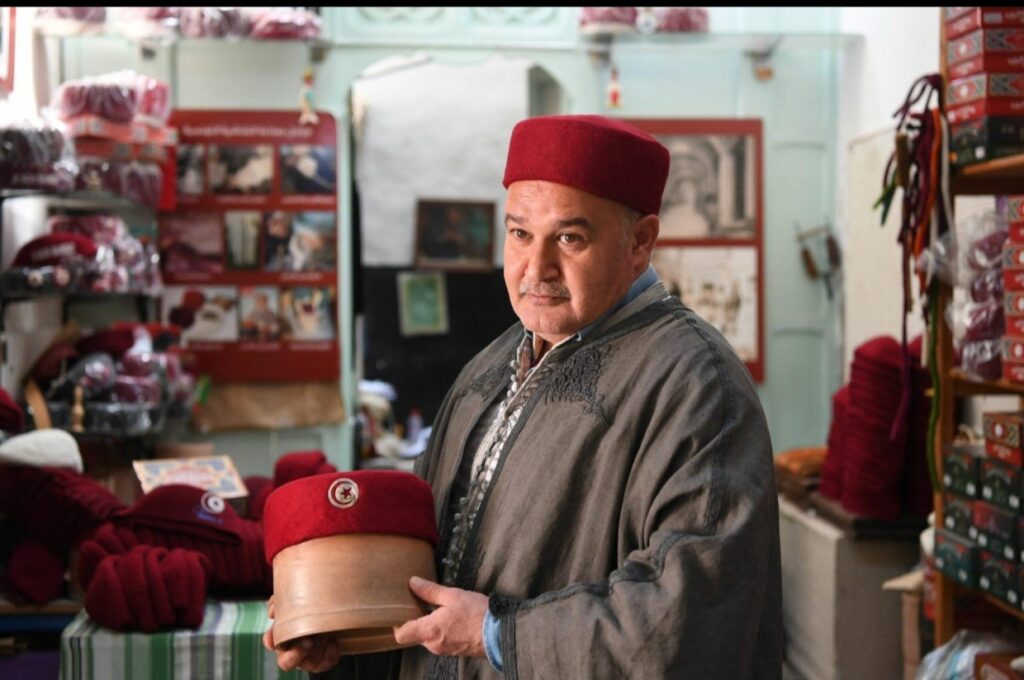
The chechia is a traditional Tunisian head covering and one of the country’s recognizable craft products. It is traditionally associated with a red felt style, although other colors are also available. The medina of Tunis has traditionally been an important center for chechia production and trade.
Because it is small and lightweight, a chechia is easy to pack and can make an unusual souvenir for travelers interested in traditional Tunisian clothing and crafts.
Where to Buy Souvenirs in Tunisia
The best place to shop depends on what you want to buy. Tunis is known for the traditional shops and souks of its medina, while Kairouan is particularly associated with carpets. Nabeul is known for ceramics, Mahdia for textiles, Djerba for pottery and jewelry, and Tozeur for palm-based crafts.
Sousse and Monastir also have souks and shops selling a wide range of Tunisian handicrafts, including carpets, ceramics, copper products, leather slippers and olive wood items.
Shopping in the Medina of Tunis
The medina of Tunis is one of the most interesting places to look for traditional Tunisian crafts. Its souks include shops specializing in different types of products, including textiles, jewelry, traditional clothing and other handicrafts.
Take your time when shopping in the medina. Looking at several shops before buying can help you compare designs, materials and prices.
Should You Bargain in Tunisian Souks?
Bargaining is common in traditional Tunisian souks, particularly when buying handicrafts and souvenirs. However, not every shop uses the same pricing system, so it is useful to check whether the price is fixed before starting a negotiation.
Keep the conversation friendly and compare prices between different shops. If you are unsure about the value of an item, visiting several stores before making a purchase can give you a better idea of the local price range.
How to Choose Authentic Tunisian Crafts
Look carefully at the materials, finishing and details before buying a handmade product. Ask where the item was made and whether it was produced by hand or manufactured. For carpets and textiles, ask about the material and dimensions, while for jewelry you should ask about the type of metal or other materials used.
If a product is particularly expensive, take your time before buying it. Comparing similar pieces from different sellers can help you understand the differences in design, craftsmanship and price.
What Souvenirs Are Easy to Pack?
If you are traveling with limited luggage, choose smaller and lighter products such as foutas, chechias, small pottery pieces, jewelry, olive wood utensils or palm-fiber baskets. Large carpets, metal objects and fragile ceramics require more space and careful packing.
For fragile purchases, ask the seller about suitable packaging before leaving the shop. If you are flying, keep valuable or delicate items in your carry-on luggage when permitted by airline and security rules.
Can You Bring Tunisian Food Products Home?
Food products can also be popular souvenirs from Tunisia, including olive oil, dates and other packaged specialties. However, import rules vary by destination country, so travelers should check the customs regulations of their home country before bringing food across the border.
For the easiest experience, choose commercially packaged products with clear labels and keep the original packaging and receipts until you arrive home.
Conclusion
If you are wondering what to buy in Tunisia, there are plenty of options beyond ordinary tourist souvenirs. From Kairouan carpets and Nabeul ceramics to Mahdia textiles, Djerba jewelry, olive wood products and Sejnane pottery, different regions offer their own traditional crafts.
The best souvenir is often something that is useful, easy to carry and connected to the place you visited. Take your time, compare products and ask questions about how an item was made. This can make your shopping experience more enjoyable and help you choose a souvenir with a genuine connection to Tunisia.
FAQ
What are the best souvenirs to buy in Tunisia?
Popular Tunisian souvenirs include pottery, carpets, foutas, olive wood products, leather goods, traditional jewelry, chechias and palm-fiber crafts. The best choice depends on the region you visit and the type of product you are looking for.
What is Tunisia famous for buying?
Tunisia is well known for traditional handicrafts such as ceramics, carpets, textiles, leather goods, jewelry, copper products and olive wood items. Different regions specialize in different crafts.
Where can I buy traditional crafts in Tunisia?
Traditional crafts are sold throughout Tunisia. The medina of Tunis, Kairouan, Nabeul, Mahdia, Djerba, Sousse, Monastir and Tozeur are among the places associated with particular types of Tunisian handicrafts.
Is bargaining common in Tunisia?
Bargaining is common in many traditional Tunisian souks, especially when buying handicrafts and souvenirs. However, some shops use fixed prices, so it is best to check before negotiating.
What is a good small souvenir from Tunisia?
Small pottery pieces, jewelry, foutas, chechias and olive wood utensils can be practical souvenirs because they are generally easier to pack than large carpets or metal objects.
Related Travel Guides
• Tunisia Travel Guide: 12 Best Places, Beaches & Costs
• UNESCO World Heritage Sites in Tunisia: Complete Travel Guid
• Tunisia Itinerary: The Perfect 7-Day Travel Guide
• Best Hotels in Tunisia: Top Places to Stay for Every Budget