
Introduction
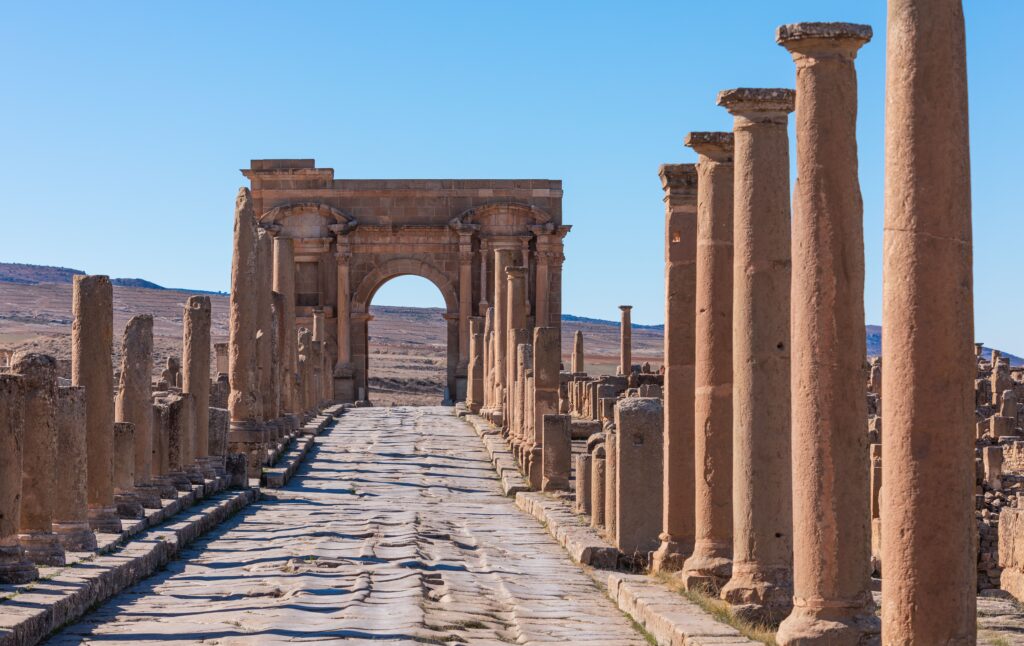
Hidden in the Aurès Mountains of northeastern Algeria, Timgad is one of the finest examples of Roman urban planning anywhere in the world. Founded by Emperor Trajan around AD 100, this UNESCO World Heritage Site offers visitors an extraordinary journey through ancient history. Wide stone streets, impressive arches, temples, baths, and one of North Africa’s most remarkable Roman theaters make Timgad a dream destination for history lovers and cultural travelers alike.
Timgad Entry Cost 2026: Ticket Price in DZD & USD
Timgad Roman city ticket 2026 costs 300 DZD ($2.2) for Algerians and 600 DZD ($4.4) for foreigners, open daily 9am-6pm winter and 8am-7pm summer, free for under 12 and students with card. Guide costs 2000 DZD ($15) per group 2 hours English or French at gate, parking 100 DZD ($0.74), museum inside included. Best visit October-November 20°C and March-April 22°C avoid July 38°C no shade. Transport from Batna city 40km costs bus 200 DZD ($1.5) 1 hour, taxi 1500 DZD ($11) 45min, private tour from Algiers 12000 DZD ($88) full day with Djemila. Total day trip Batna-Timgad 3000 DZD ($22) including ticket, guide share, transport, lunch couscous 500 DZD. No drone without permit, carry water 2L and sunscreen, 2-3 hours needed to see arch, theatre, library, and forum.
Why Visit Timga?
Unlike many ancient archaeological sites that have been heavily damaged over time, Timgad remains remarkably well preserved. Visitors can walk through original Roman streets, admire public buildings that are nearly two thousand years old, and imagine daily life in one of Rome’s most successful colonial cities. The peaceful atmosphere, stunning mountain backdrop, and relatively small crowds make the experience even more rewarding
Best Time to Visit
Spring and autumn are considered the ideal seasons thanks to comfortable temperatures and clear skies. Summer can become extremely hot during the afternoon, while winter is cooler but still pleasant for exploring the ruins.
History of Timgad
Timgad was founded by the Roman Emperor Trajan to serve as a military colony for retired Roman soldiers. Designed using a perfectly organized grid pattern, the city quickly became an important administrative and commercial center. Its prosperity lasted for centuries before invasions and changing political powers eventually led to its decline. Today, the remarkably preserved ruins provide an exceptional insight into Roman civilization in North Africa.
Top Attractions in Timgad
Trajan’s Arch
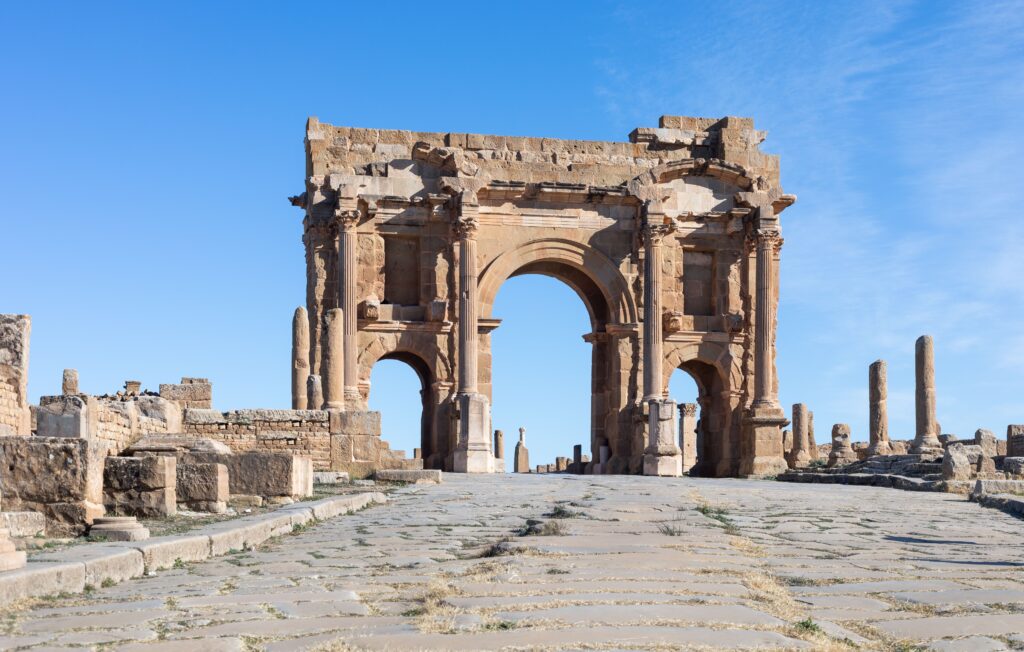
Standing proudly at one of the city’s entrances, Trajan’s Arch is the most iconic monument in Timgad. Its impressive stone construction welcomes visitors just as it welcomed travelers nearly two thousand years ago.
The Roman Theater
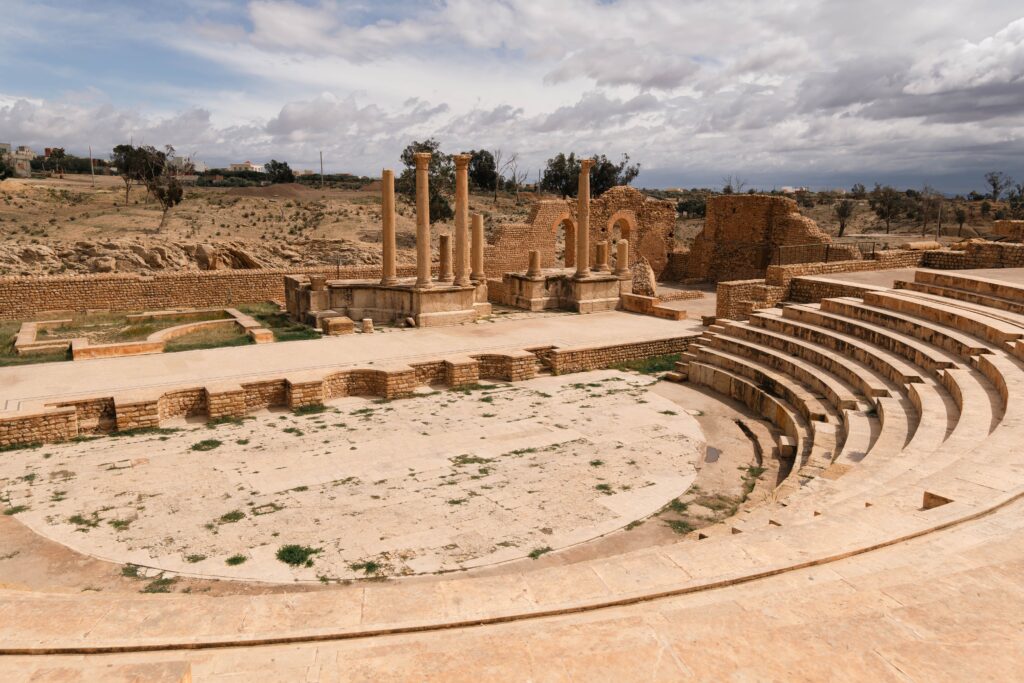
The beautifully preserved theater could once accommodate thousands of spectators. Even today, cultural events are occasionally held here, bringing new life to this remarkable structure.
The Forum
The Forum served as the political and social heart of ancient Timgad. Walking through this central square allows visitors to appreciate the city’s impressive urban planning.
The Library
Timgad is home to one of the few surviving Roman public libraries in Africa, highlighting the city’s importance as a center of education and culture.
Public Baths
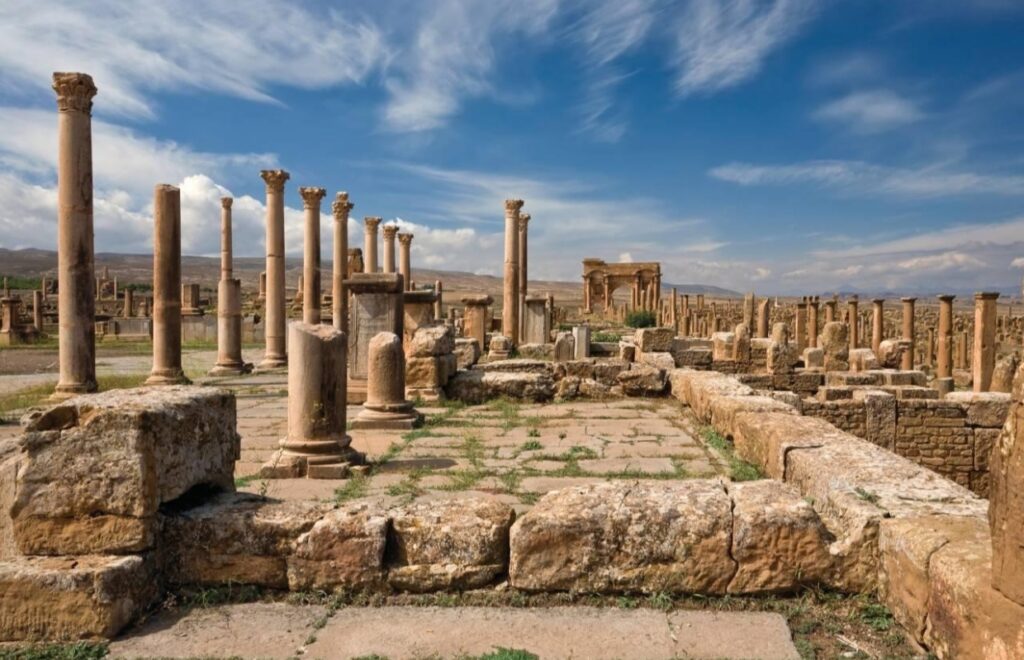
Several bath complexes demonstrate how important hygiene and social gatherings were in Roman daily life.
Temples and Basilicas
Scattered throughout the archaeological site are temples dedicated to Roman gods as well as later Christian basilicas that illustrate the city’s changing religious history.
UNESCO World Heritage Site
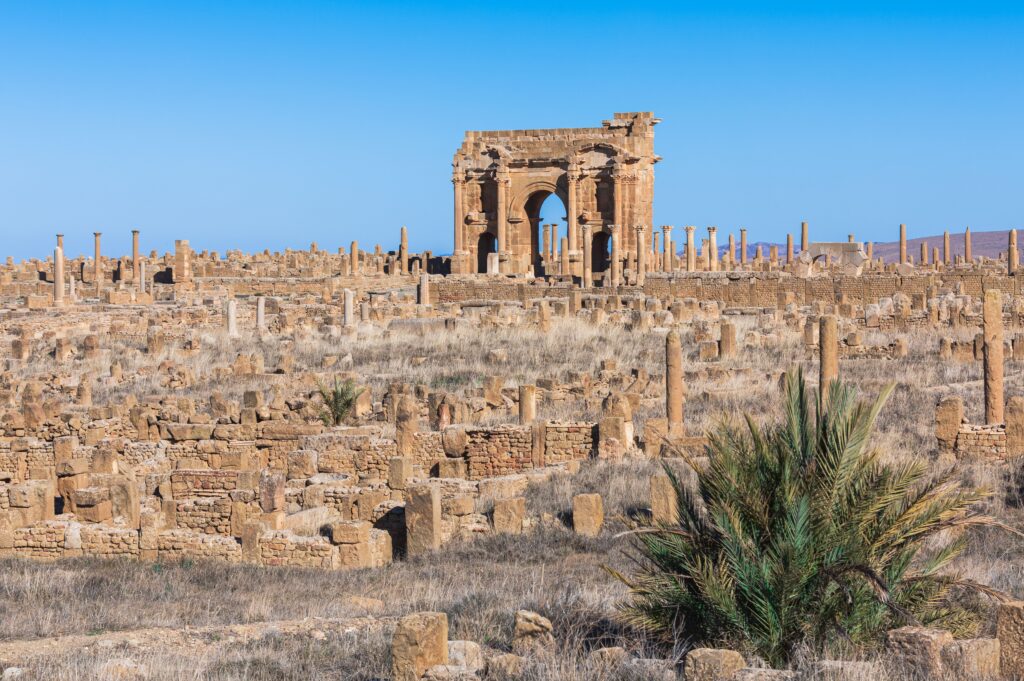
Since 1982, Timgad has been recognized as a UNESCO World Heritage Site because of its outstanding preservation and historical significance. It remains one of the world’s finest examples of Roman colonial town planning.
Photography Tips
Early morning and late afternoon provide the best lighting for photography. The warm golden sunlight highlights the ancient stone architecture and creates spectacular contrasts throughout the ruins.
Nearby Attractions
Visitors often combine Timgad with nearby destinations such as:
• Lambèse Roman Ruins
• Batna
• Aurès Mountains
• Ghoufi Canyon
Entrance Fees
Ticket prices are generally affordable and may vary depending on nationality or special exhibitions. Guided tours are also available for visitors interested in learning more about Roman history.
Travel Tips
• Wear comfortable walking shoes.
• Bring water during warmer months.
• Visit early to avoid the midday heat.
• Hire a local guide for a richer historical experience.
• Allow at least half a day to explore the site.
Frequently Asked QuestionsIs
Timgad worth visiting?
Absolutely. It is considered one of the best-preserved Roman cities in the world.
How long should I spend there?
Most visitors spend between three and five hours exploring the archaeological site.
Can families visit?
Yes. The open spaces and fascinating ruins make it suitable for visitors of all ages.
Is a guide necessary?
Not required, but highly recommended if you want to fully understand the site’s history.
Conclusion
Timgad offers one of the most remarkable archaeological experiences in North Africa. Its perfectly planned streets, monumental architecture, and rich Roman heritage transport visitors back nearly two thousand years. Whether you’re passionate about history, architecture, or simply looking for a unique destination in Algeria, Timgad deserves a place on your travel itinerary.